
In this section
In This Section
Preceptorship
The term preceptorship has been used for some time in the healthcare setting, particularly within other health professions. However, there are many definitions and many different ways in which preceptorship is delivered. The information provided below seeks to clarify what preceptorship means for the radiography workforce.
Definition
It is recognised across various professional groups that transitioning from being a learner to a registered practitioner can be challenging and daunting. For radiographers, registration with the Health and Care Professions Council (HCPC) carries significant professional and legal responsibilities to practice as an autonomous, safe and effective practitioner. During the transition period from learner to registered practitioner, it is important to support both the professional and personal well-being of the newly qualified practitioner (NQP).
In addition to preceptorship being recognised as an important factor in supporting the transition of newly qualified practitioners into practice, it has also become recognised as having benefits for other members of the workforce, as throughout a practitioner’s career, there will be various points of transition into new roles or areas of practice.
In recognition of these various transition periods in a practitioner’s career, the Health and Care Professions Council has defined preceptorship as:
“….a period of structured support provided to HCPC registrants at key moments of career transition. This includes joining the workforce for the first time, returning to work after a long period away (including being re-admitted to the register), working in the UK for the first time, taking up a new role, or moving to a new organisation, to give them confidence to act as an autonomous practitioner.“ (HCPC 2023) |
In line with the HCPC and NHS England (NHSE), the College of Radiographers (CoR), recommends that employers offer a period of preceptorship for radiography practitioners experiencing a period of transition in practice.
This may include:
- A newly qualified practitioner starting their first employment following initial registration.
- A practitioner moving into a different organisation
- A significant change to a practitioner’s area of practice
- Internationally recruited radiographers starting employment in the UK
- Practitioners returning to practice following a career break or extended period of leave (beyond two years, in alignment with HCPC guidance)
What preceptorship is, and is not…
Preceptorship is not the same as formal induction into an organisation, however it may begin and occur alongside induction.
Induction covers statutory and mandatory training requirements as a new member joining an organisation. Induction may also include competency signoffs for the safe use of various radiography equipment and technologies in line with local departmental processes, health and safety and radiation protection legislation requirements.
In radiography, at the point of registration, newly qualified practitioners are recognised as autonomous practitioners having been deemed to have met the HCPC Standards of Proficiency for radiographers and other requirements for registration to be able to practice in the UK.
Therefore, preceptorship is not intended to be competency-focused or to replicate pre-registration training. Instead, preceptorship seeks to build upon the individual practitioner’s previous learning and experiences to develop their confidence as an autonomous and accountable professional.
To support this, and for maximum benefit, preceptorship should take into account the learning and development needs of the individual and be tailored to suit.
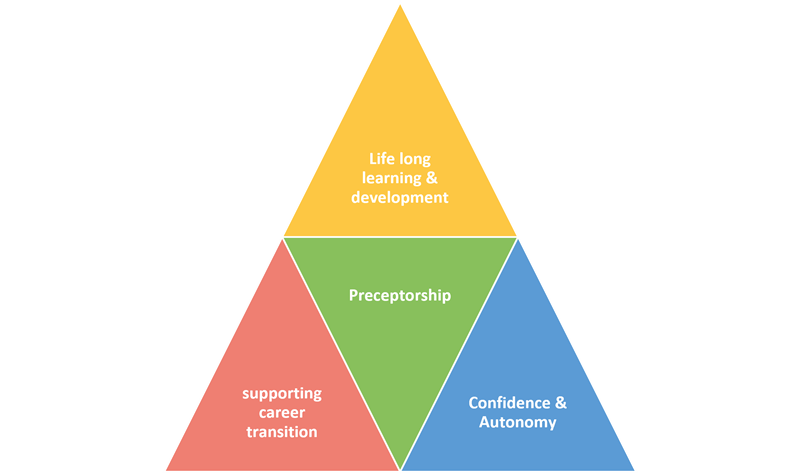
Preceptorship therefore has the key elements of supporting career transition, developing confidence and building autonomy, encouraging life-long learning and career development.
Preceptorship is structured and offered over a period of time. In radiography this is typically over a 12-month period. Further details on content and structure are provided in the sections further down.
Hub Navigation
Navigate the Preceptorship Hub |