
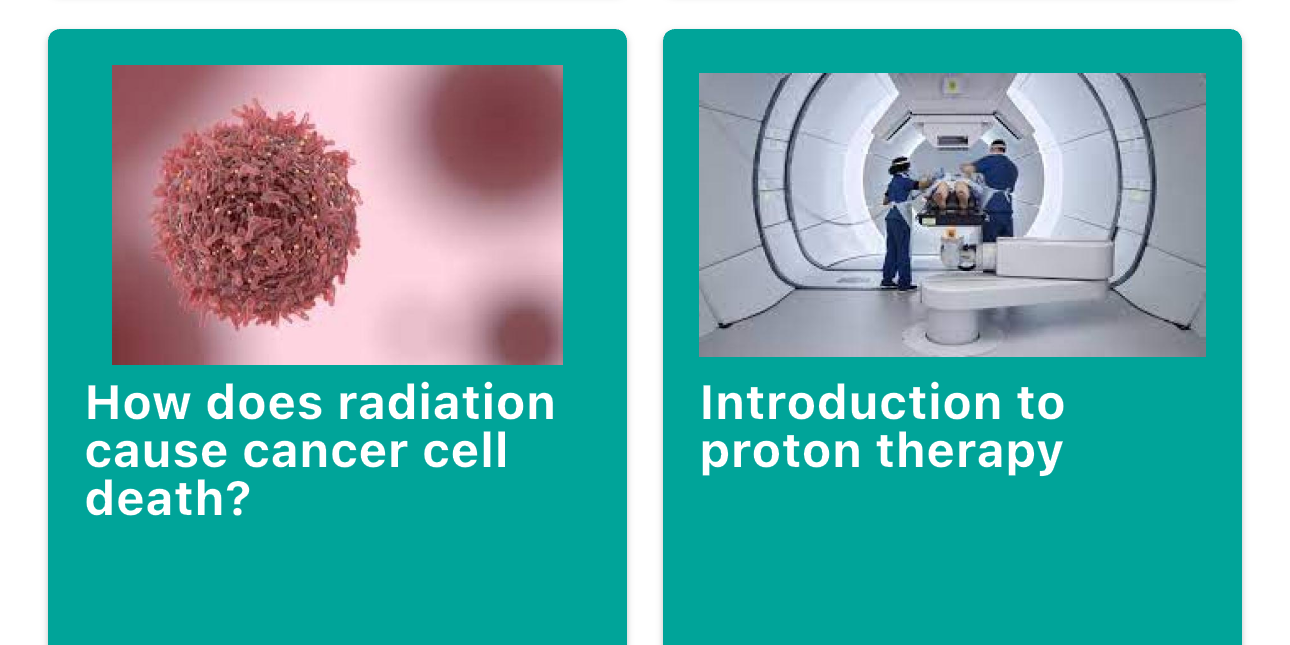
The Royal Surrey NHS Foundation Trust’s educational services app has approached nearly 400 users, far exceeding the expectations of its founders.
Over the last three years, the radiotherapy team at the Royal Surrey County Hospital (RSCH) has been developing an app for use by its students on placement to support education accessibility in the wake of the pandemic.
The app, developed by the radiotherapy team at the RSCH in collaboration with software development firm Piota, provides training videos, quizzes and reference information for students, as well as administrative details like placement information and communication updates.
Since its launch in 2022, the app has continued to grow and hit an all-time high of 400 users in December 2025.
Dynamic, pro-teaching
Emma Morris, radiotherapy lead practice educator at the Royal Surrey, explained that the department first identified a gap in their educational services during the pandemic, where student access to group teaching sessions became difficult.
The main site of the Royal Surrey and its satellite site are 40 minutes away from each other, and the hospital employs a significant portion of part-time staff, which led the team to thinking about how to creatively offer an educational service to everyone equally.
However, limited budgets left them struggling to develop an educational app. It wasn’t until Emma, in attendance at a conference in 2022, encountered digital communication firm Piota that they were able to create a solution. Piota was demonstrating a patient portal app used by various trusts that Emma saw could be adapted to the Royal Surrey’s needs – working alongside them, Piota and the Royal Surrey built their own educational app from scratch.
She added: “We’re a dynamic team here. We’re very pro-teaching. All of the staff have contributed towards this app, we’ve got a lot of specialists who have brought in their input, and we’re really proud of their contributions.”
Theory and practice
The app provides all placement information for students, allows staff to update students on sudden issues (for example, a machine having broken down), and lets them see if they’ve been reallocated. Students get a full rundown of treatment techniques before arriving on-site so they can refresh their memory, which helps them get their competencies signed off.
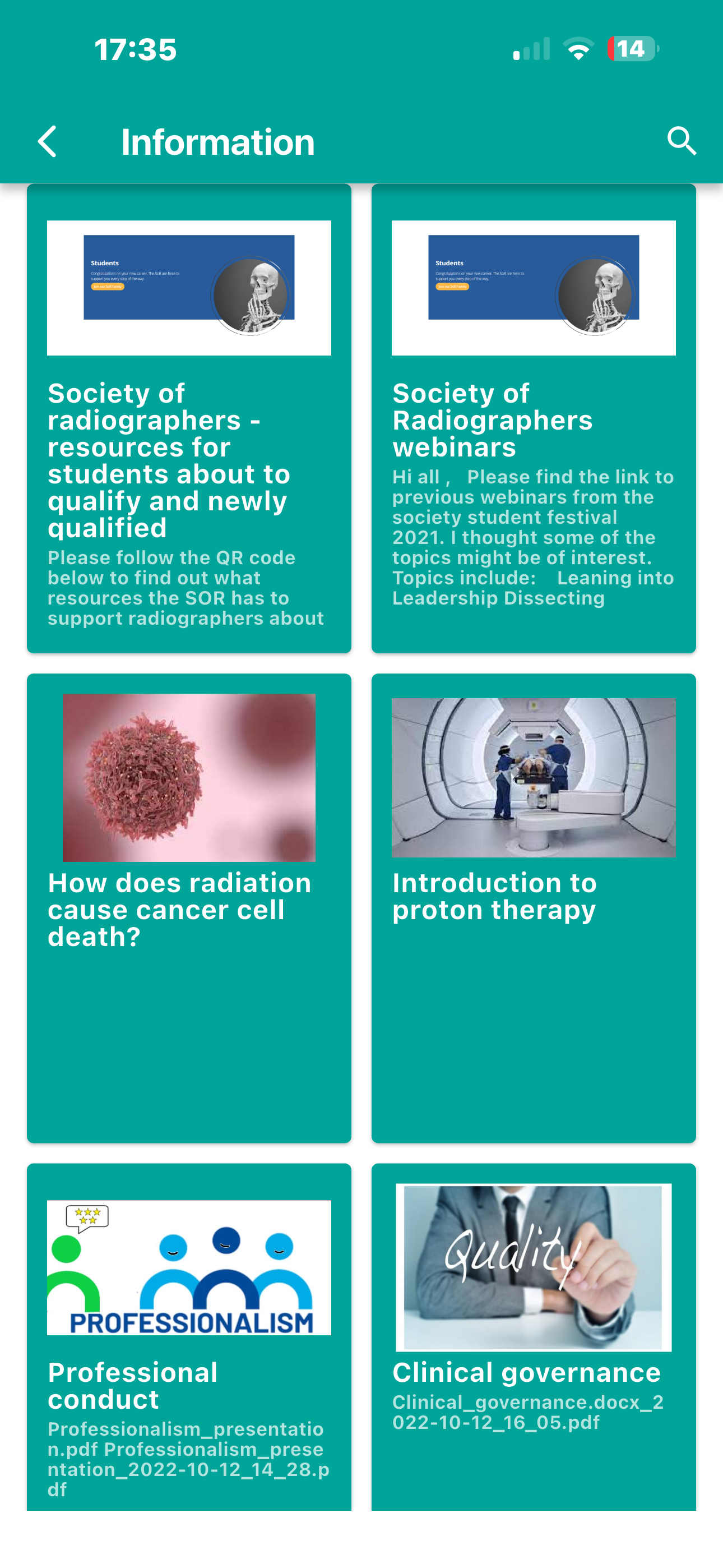
(Image: Screenshot of the RSC radiotherapy education app)
Any training sessions or lunchtime talks are also uploaded via video streaming website Vimeo, meaning staff can see the training as well as students, and can be watched even on the way to their placement site.
She explained that feedback from students has been “fantastic”.
Now, the team is working to develop self-marking questionnaires within the app, so educators can put out multiple-choice questions to see if they can bridge the gap between theory and practice.
Emma continued: “We're also hoping to do some image matching videos for students, so that they can see the staff matching video images online with an anonymised image. That way they can see our thought processes when we're doing our job, so they can pick out the theory and the practice.”
Giving students the tools to achieve
Alongside these advancements, the app will be able to provide information and links to continuing professional development opportunities, whether through the SoR or external courses, and book them via the app.
In total, the app cost around £5,000 to develop and implement, thanks to the close collaboration of Piota.
Emma concluded: “The workforce climate is so different to where it was even 10 years ago. We need to think of students as a commodity to build. We need to attract staff in, and that starts when they begin training. We need to think of them as a resource that can grow into a colleague we want to work with. Rather than knocking students down if they’re not achieving their targets, it's about the opposite – building them.
“Acknowledging the things they’re good at, giving them the tools to be able to achieve. There are going to be students who fail, but leading with kindness has really helped our departmental reputation. People want to come here when they’re qualified, because they know it’s a nice department to work in. It helps to create that recruitment work stream, because students want to stay.”
(Image: Training available via the RSC radiotherapy education app, via Emma Morris)