
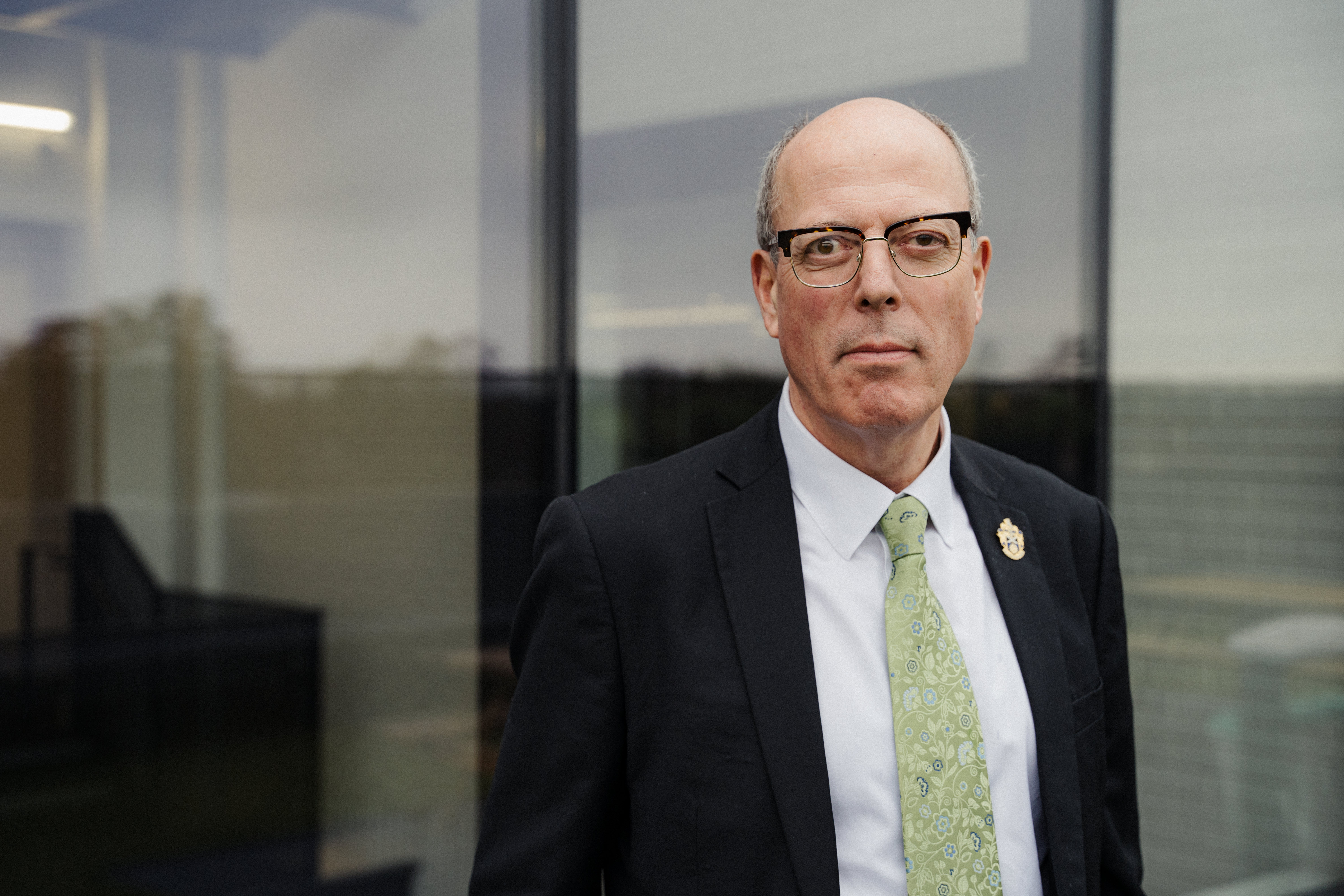
Richard Evans, chief executive of the Society of Radiographers has expressed concerns about the financial state of the higher education sector, calling the potential knock-on effects of redundancies as having a “significant impact” on radiography programmes.
Universities across the UK are facing significant financial strain, caused in part by a decline in the recruitment of international students combined with higher operating costs, resulting in budget cuts and widespread redundancies for both academic and non-academic staff.
On 20 January 2026, Richard wrote to the Rt Hon Baroness Jacqui Smith, Minister for Skills and Minister for Women and Equalities. In his letter, he shared his worries over the redundancies and restructuring that could come from a lack of investment in the radiography sector, and emphasised the impact on patient treatment and waiting times.
The letter was sent following a year of building concerns about capacity within the radiography sector, with the profession cognizant of the pressures of increasing waiting lists and workforce shortages.
'Inevitable impact'
Richard highlighted that the radiography academic workforce is aware of the rising demand for imaging investigations and for radiotherapy treatment, and therefore, the need to grow the radiography workforce at this time, rather than to consider making cuts to education and training programmes.
He implored Baroness Smith to consider the impact of making any changes and reductions, which might result in lower numbers of students qualifying in radiography. This would not be helpful at a time when the imaging and radiotherapy workforce training numbers need to increase to meet growing clinical demand.
“As radiographers, we are acutely aware that patient demand for imaging tests and radiotherapy is rising,” Richard wrote. “Simply meeting this demand – and ensuring that patient waiting times do not further increase – will require a six per cent year-on-year increase in the radiography workforce. The rate of growth is currently three per cent, and that’s before any proposed funding cuts.”
He also emphasised the effect on radiographer-led learning and research, which he said would suffer from a decline in funding.
“The Office for Students indicates that 45 per cent of higher-education providers in England could be in deficit this financial year,” Richard continued. “This will have an inevitable impact on staffing levels and research capacity.
“The loss of skilled educators will compromise – and could therefore threaten – the viability of radiography undergraduate and pre-registration master's programmes across the country. This, in turn, will mean that fewer students will train, register and work as radiographers.”
Workforce investment
On 5 March, Karin Smyth, Minister of State for Health with responsibility for the NHS workforce, issued a response to Richard’s letter. She said that departmental officials had contacted NHS England for more information and signposted to the upcoming 10 Year Health Plan for England. “The plan will ensure the NHS has the right people in the right places and with the right skills, to care for patients when they need it,” she wrote.
Baroness Smith then also responded to Richard’s letter on 24 March. In reference to financial pressures on higher education, she wrote that universities are ultimately responsible for staff pay, but added that her department encourages universities to develop “sustainable models” with staff for talent and expertise retention.
She pointed to the new plan for higher education reform laid out in the Post-16 Education and Skills white paper, along with the planned increase in tuition fee caps in line with expected inflation in 2026 to 2027 and 2027 to 2028.
The minister also said that the government shares the SoR’s commitment to ensuring quality education and training, and pointed to the to-be-published 10 Year Health Plan for England and the Department for Health and Social Care’s upcoming 10-year workforce plan as proof of the government’s investment in expanding the radiographic workforce to meet demand.
“Protecting the supply of skilled radiographers is central to these ambitions, and we will continue to make the case for investment in education and workforce development,” she continued. “The government is working closely with partners across education, regulation and the NHS, including regional allied health professional teams, to understand the risks and identify practical solutions.”
The SoR says it will continue to lobby the government to ensure that the priorities for radiography are understood. The professional body also warns that any cuts in educational programmes will endanger plans to increase the workforce, which is required to deliver imaging and radiotherapy services.
Rising demand
There has been some progress in the fight to meet rising demands amidst workforce shortages. Last year, the SoR welcomed plans to up the operation and capacity of Community Diagnostic Centres (CDCs), and reacted positively to the news that thousands of scans had been made available out-of-hours at local health centres in England.
But each of these instances was met with a warning from the Society to address the radiographer workforce shortage to meet demand. Responding to the extended CDC hours news, Charlotte Beardmore, the SoR's executive director for professional policy, said it was “essential” that workforce capacity increased.
“However, as the demand for imaging continues to grow, it is essential that capacity to deliver more imaging is increased,” she said. “To support CDCs, the government must invest in the radiography workforce. This means investment in new NHS posts for radiographers to ensure all CDCs offer the capability, flexibility and the range of services for patients in their local community.”
Over the weekend, Katie Thompson, president of the SoR also appeared in national media to speak about the sonographer shortage and its knock-on effects on pregnancy scans and cancer treatment.