
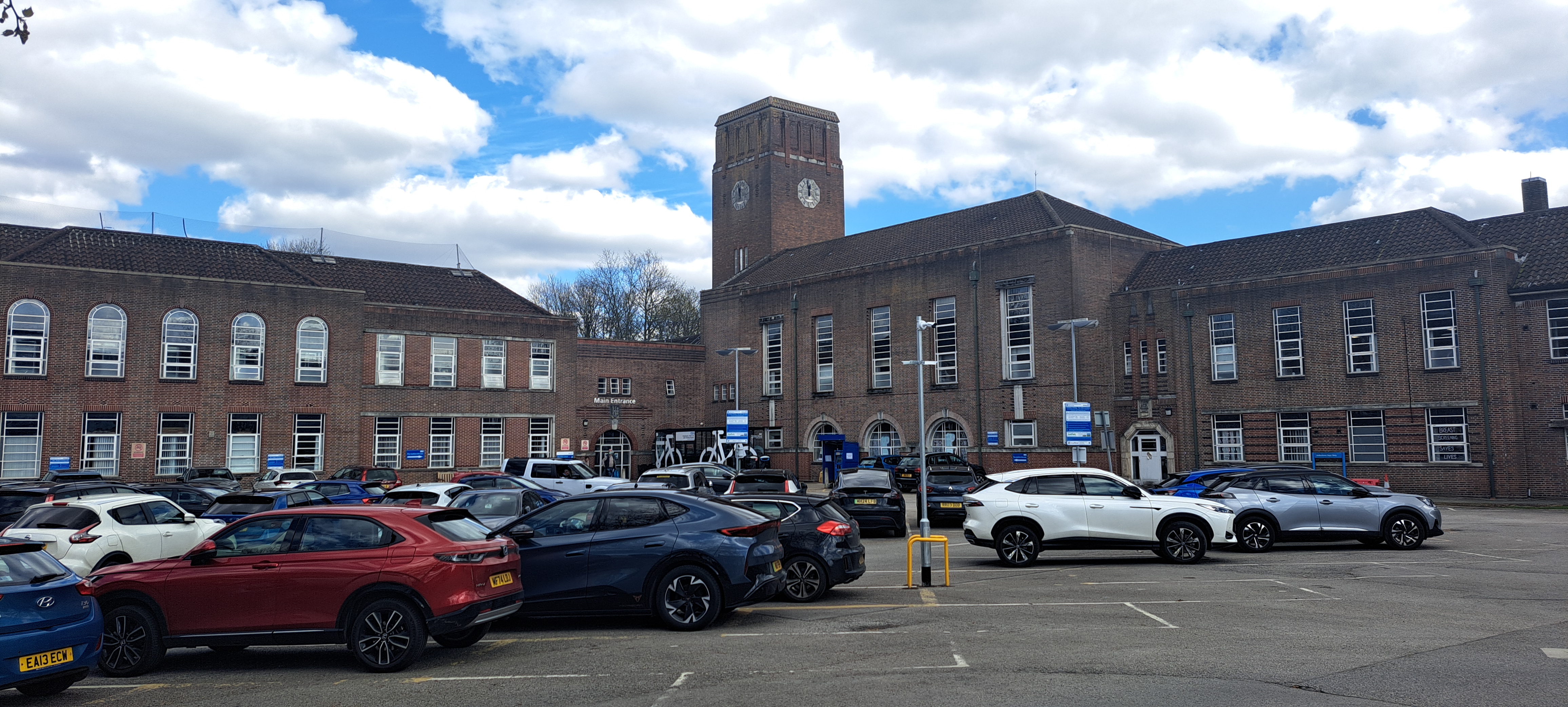
The team at the South Lancashire Breast Screening Unit has implemented contrast mammography into the department at the trust’s Thomas Linacre Centre, Wigan, as part of efforts to improve breast cancer detection.
In celebration of the accomplishment, the team supporting the implementation gathered on Friday (April 10) to explain their success to members of Boot Out Breast Cancer, the charity which funded the project.
Attendees were presented with an explanation of how contrast-enhanced mammography was improving breast cancer diagnosis and speeding up treatment.
Cost-effective, faster, safer
Grace Easton has been clinical lead at Wrightington, Wigan and Leigh Teaching Hospitals NHS Foundation Trust for the breast imaging department and South Lancashire Breast Screening programme for two and a half years, and is extremely proud of the “notable achievement” the team has managed.
She explained that contrast-enhanced mammography is superior in performance to standard 2D mammography for cancer detection. In particular, contrast-enhanced mammography improves cancer detection rates in dense breast tissue.
While contrast mammography is available in a lot of other countries, its availability in breast imaging departments in the NHS is varied, Grace explained. Contrast-enhanced mammography performance is comparable to an MR scan at a time when the waiting list for MR breast scans can be extensive.
The team at WWL benefits from contrast-mammography’s greater cost-effectiveness, shorter scanning time, and lesser impact on claustrophobic patients or patients with contraindications to MR.
Patients attending the department first do a pre-screening questionnaire to identify any risks and contraindications to receiving contrast. If there are no risks identified, contrast-enhanced mammography can be performed in a matter of 6-8 minutes.
Supporting clinicians and patients
Implementing the project has taken the team since March of 2025, in large part thanks to donations from the Boot Out Breast Cancer charity.
Debbie Dowie, founder of the charity, said: “It means a great deal to us at Boot Out Breast Cancer to be able to support the introduction of contrast mammography with the department. Early detection and accurate diagnosis are absolutely vital in improving outcomes for patients, and investing in advanced technology like this can make a real, life-saving difference.
“As a charity, our mission is to fund equipment and initiatives that directly enhance patient care, and we are incredibly proud to have contributed towards this important development. Knowing that this technology will support clinicians and benefit so many individuals and families is exactly why we do what we do.”
For contrast-mammography to be implemented, Grace explained that there were various steps that needed to take place to ensure patient safety and national guidance were being met. These included additional training for staff to learn how to cannulate for the administration of contrast and how to administer adrenaline in the event of an anaphylaxis response. Standard operating procedures and patient group directives were written, as well as working closely with medical physics to establish quality assurance testing for contrast mammography.
'There's a big emotional component'
With the introduction of contrast-enhanced mammography, patients with symptoms of breast cancer can have their fears assuaged much faster. Contrast-enhanced mammography provides an imaging tool that works on the basis of angiogenesis, which was previously only available via MR breast imaging.
Patients will now be able to have cancer confirmed or excluded via contrast-enhanced mammography rather than waiting for an MR scan with contrast to confirm or exclude malignancy. Contrast-enhanced mammography is faster and more accessible than MR imaging, which will improve cancer diagnosis waiting times.
Dr Amruta Talwalkar, director of Breast Screening on the programme, said: “That relief, of knowing there’s nothing wrong immediately, is a big factor for any patient who comes in for a breast assessment. There’s a big emotional component to it. With this [contrast-enhanced mammography], we’re able to tell almost all patients whether or not we’re worried straight away.”
The next step with the team will be to implement contrast-enhanced mammography stereotactic biopsy, which will help to speed up the pathway even faster. Contrast-enhanced guided biopsies can be performed on the day of diagnostic investigations rather than patients being rebooked for an MR biopsy on an alternative date.
(Image: Thomas Linacre Centre, South Lancashire Breast Screening Unit)