
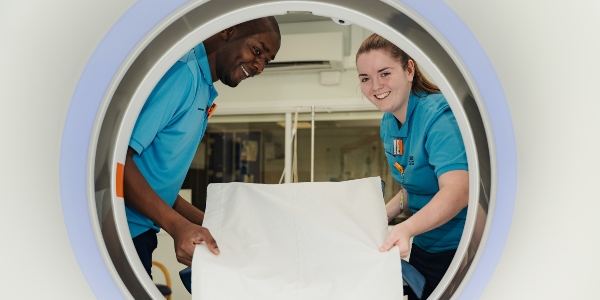
The Society of Radiographers is marking the 2026 National Careers Week by publishing a series of articles aimed at students, teachers and the general public, to showcase the many radiography careers that are on offer.
National Careers Week, which runs from 2-7 March, is an annual celebration of careers guidance that helps students, educators and parents navigate future employment pathways.
Here, Michelle Tyler, professional officer for careers promotion and outreach at the SoR, sets out the role of radiographers and why they are so essential in providing outstanding care for patients.
When we think about healthcare ‘capacity’, it’s easy to picture numbers: how many hospital workers, how many beds, how many scanners. But modern healthcare is not simply a numbers game. It’s about how care is designed, how patients move through services, and how the right professionals are in the right place at the right time.
Therapeutic and Diagnostic Radiographers and the support workers alongside them are central to that design. They are shaping the future for patients and the public to support them in maintaining their health.
You may think of radiographers as the professionals who “take X-rays”. In reality, they are highly skilled healthcare professionals who play a vital role across almost every patient pathway, from emergency departments to cancer care, maternity services to community diagnostics. You may have even met a radiographer performing an ultrasound before you were born or perhaps taking a family member for radiotherapy treatment later in life.
Radiographers working across healthcare
Every day, radiographers help diagnose injuries, detect disease, guide life-saving treatments and monitor recovery. Without imaging and radiotherapy services, many clinical decisions simply could not be made. In fact, most patients will encounter a radiographer at some point in their care journey. And radiographers work beyond front-line clinical care. You will find them working within the research field, the education sector, academic roles leading research, military services, quality and patient safety and senior management and service leadership roles. They usually work within the NHS but also in the private sector and charitable organisations related to health.
So, radiography is about far more than technology.
Radiographers work at pivotal moments in people’s lives: after a sudden accident, during cancer treatment, when a worried parent brings in a child, or when someone is facing a life-changing diagnosis. At these moments, professionalism and compassion matter just as much as clinical expertise.
Balancing advanced, accurate technology with human connection is at the heart of the profession. Radiographers must combine scientific knowledge with clear communication, ethical practice and empathy. They explain procedures, ease anxieties, maintain dignity and ensure patient safety, all while operating complex equipment and making critical decisions.
Better for patients
Healthcare systems are increasingly recognising that true “capacity” is not just about having more equipment or more staff. It is about designing pathways that work efficiently and safely for patients. Radiographers are key contributors to this. Many take on advanced and consultant roles, leading services, improving patient flow, developing new techniques and shaping the future of care delivery.
Radiography is also a profession that continues to evolve. Innovations in imaging, artificial intelligence, interventional procedures and personalised cancer treatments mean the role is dynamic and future-focused. There are opportunities to specialise, to lead, to teach, to research and to make a difference locally and nationally.
During National Careers Week, we want to shine a light on this rewarding and impactful profession.
If you are interested in science, technology and healthcare, and care deeply about people, radiography offers a unique blend of both. It is a career where you can contribute to life-saving decisions, support patients and their families at vulnerable moments and be part of a profession shaping the future of healthcare.
Radiographers don’t just operate machines. They enable diagnoses, guide treatments, improve pathways and provide reassurance when it matters most.
To learn more about careers in radiography and how to begin your journey, visit our careers pages and discover how you could be part of this essential profession.
(Picture by Eva Slusarek)