
A member of the SoR is shaping the future of the AHP workforce through the Workforce Research Partnership, which has published its top 10 research priorities.
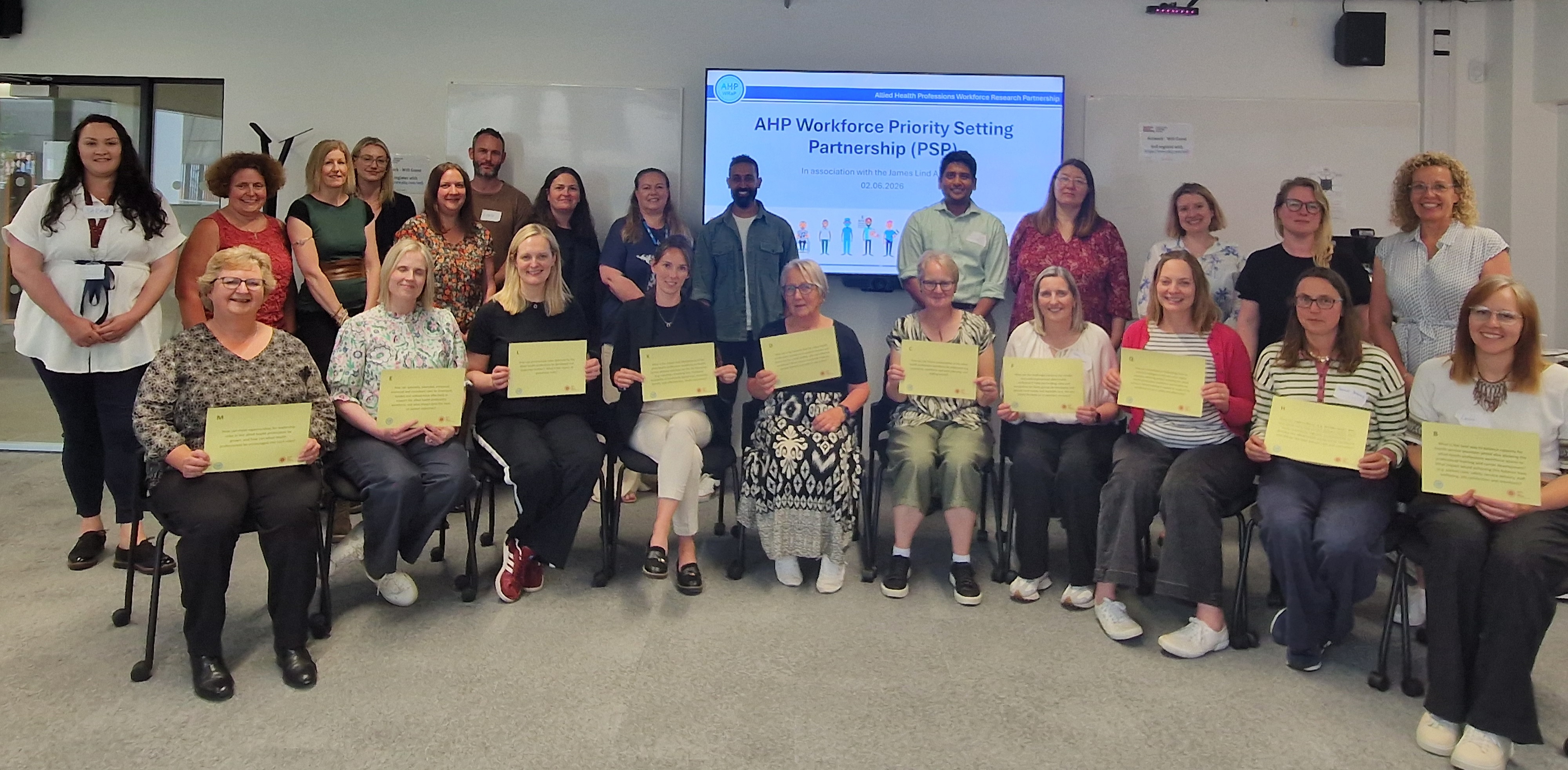
Professor Julie Nightingale of Sheffield Hallam University is co-lead on the AHP Workforce Research Partnership (WRaP), one of five research partnerships announced in April 2025 by the National Institute for Health and Care Research (NIHR) to tackle major challenges facing NHS and social care staff. The team recently completed a Priority Setting Partnership workshop to decide their goals over the next five years.
AHP WRaP brings together a collection of academic institutions, healthcare providers, patient bodies and patient groups, led by Sheffield Hallam University and supported by the SoR, to investigate how best to use AHP staff in the delivery of healthcare services.
On 16 June, WRaP unveiled its full 26 research priorities, including a top 10, which represent the most important unanswered questions for AHP workforce research.
'A fantastic achievement'
Charlotte Beardmore, executive director for professional policy at the SoR, said: “It is particularly inspiring to see Professor Julie Nightingale, a radiographer, leading this major NIHR-funded programme and helping to shape the future direction of AHP workforce research across the UK.
“The emergence of these top 10 priorities is a fantastic achievement, reflecting the collective expertise and experiences of practitioners, service users and system leaders. The strong focus on workforce sustainability, leadership, innovation, career development and equitable support for all AHP professions highlights the issues that matter most to both retaining a skilled and motivated workforce and delivering high-quality patient care.”
This announcement comes thanks to the completion of a national Priority Setting Partnership, a consultation process designed to identify the most pressing priorities for health workers, run in association with the James Lind Alliance (JLA). The JLA is a non-profit organisation funded by the NIHR to identify gaps in health and care research.
To gather information, the PSP process involved a national survey, thematic analysis and verification of research evidence, a second national prioritisation survey, and a final consensus workshop with frontline AHPs, researchers, NHS leaders, AHP professional bodies, and people with lived experience.
Professor Nightingale, who led on the PSP project for WRaP, said: “I was really pleased with the final priorities, which highlight long-standing workforce issues that also align well with current policy shifts including hospital to community, analogue to digital, and moving from sickness to prevention.
“I would like to thank frontline AHPs, AHP leaders and service users for their participation in this important project which will help to shape future workforce research. Thank you also to the SoR for supporting us throughout this project to ensure that radiographer perspectives were represented.”
Through that process, the WRaP gathered more than 2,400 total responses from more than 1,500 AHPs and 41 public contributors and received 1,700 research question submissions. Professor of diagnostic radiography Ruth Strudwick, of the University of Suffolk, was Patient and Public Involvement and Engagement lead on the partnership.
Adapt, innovate and respond effectively
Following this PSP process, the top 10 research priorities for AHPs are:
- What is the impact and effectiveness of the AHP workforce on health service delivery, and how can this be measured?
- How can it be ensured that the AHP workforce is properly funded and resourced?
- How can organisations and service delivery teams work more seamlessly together in partnership?
- How are innovations in technology affecting and/or assisting the AHP workforce and health service delivery? What training is needed to support its safe and effective use?
- How can the future sustainability of the AHP workforce be addressed?
- How can more opportunities for leadership in the AHP workforce be grown, and how can AHPs be encouraged into such roles?
- How can preventative roles delivered by the allied health professions be developed and supported further?
- What is the best way to balance capacity for health service provision while also allowing the AHP workforce access to professional training and career development?
- How can speciality, extended, enhanced, advanced and consultant roles be developed, funded and utilised more effectively to support the AHP workforce?
- What are the challenges faced by the smaller and underrepresented allied health professions? How can funding, roles and recognition for these groups be developed and spread more evenly and equitably?
Charlotte added: “As healthcare needs and service models continue to evolve, research of this kind is essential to ensure the allied health professions are equipped to adapt, innovate and respond effectively to changing contexts. Turning these priorities into meaningful change will require continued investment in research and workforce development, ensuring the evidence generated can support workforce retention, strengthen professional recognition, and drive continual improvements in patient outcomes and experience.”
These priorities highlight where research is most urgently needed to support a sustainable, skilled, and future-ready AHP workforce. They will guide researchers, funders, policymakers and professional bodies in shaping future programmes of work.
All 14 of the AHP roles were represented across the devolved nations, from frontline clinicians, leaders, academics, patients and the public.
To find out more about AHP WRap, click here.
(Image: PSP workshop participants and the PSP team, holding up the 10 priorities)