
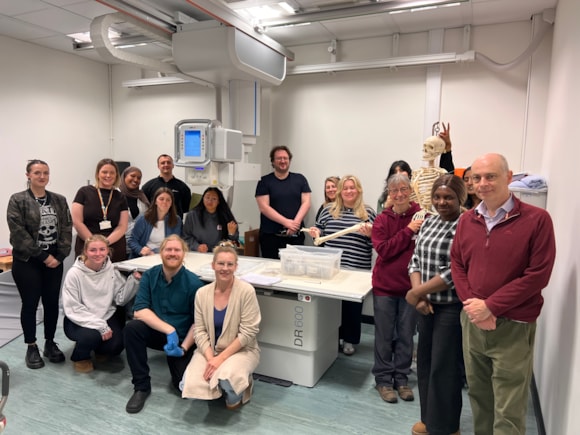
Student radiographers, medical imaging academics and members of the Uncovering Roman Carlisle community archaeology team are collaborating to unlock Roman secrets.
Artefact imaging sessions have brought the groups together on the Uncovering Roman Carlisle project, with X-ray scans helping to unveil buried secrets at the Carlisle Cricket Club's Edenside ground.
At the university’s Fusehill Street campus, students have learned about different approaches to conservation, and the national significance of the Roman dig site, located in Carlisle, Cumbria.
He said: “We’ve loved working with the Uncovering Roman Carlisle team, using our state-of-the-art X-ray equipment at the Fusehill campus to reveal fascinating new insights into life in Roman Carlisle.
“Our BSc Diagnostic Radiography students across all three years showed real enthusiasm and professionalism, producing high-quality images and embracing this unique learning experience.
“A huge thank you to the archaeologists for providing the artefacts and sharing their expertise in uncovering the stories behind them. It is a fantastic collaboration and we’re excited to see many more artefacts brought to life through X-ray imaging in the future.”
Understanding conservation needs
The hands-on sessions have allowed students to uncover valuable information about the Roman items including:
- Internal structure and shape of the artefacts
- Hidden decoration and inlays, or rivets
- Mechanisms (like ones that may be found in a lock)
- Informing conservation treatment needs
- Assessing if there were embedded artefacts hidden in lumps of concretions
X-rays are invaluable in helping to understand the conservation needs of the objects and create a lasting record of them.
Images taken using X-rays have so far shown clear examples of a Roman utility knife, fragments of sword blades, knives, spear points, spear butt-spikes and ferrules (the blunt base of a spear), as well as what may be lynch pins and nails.
Evidence also suggests the remains of an iron strigil, a tool used in Roman bathhouses to scrape sweat, mud and oils from the body upon which further investigation will be required.
Enthusiasm and professionalism
Dr Iain McDonald, senior lecturer in medical imaging science at the University of Cumbria Institute of Health, has worked along alongside medical sciences lecturer Kimberley Bradshaw and senior technician Jonny Forsyth to facilitate the sessions for first, second and third-year students.
Find out more about the University of Cumbria's Diagnostic Radiography course online here.
(Image: Radiography students and staff at the the University of Cumbria with members of the Uncovering Roman Carlisle project, via University of Cumbria)